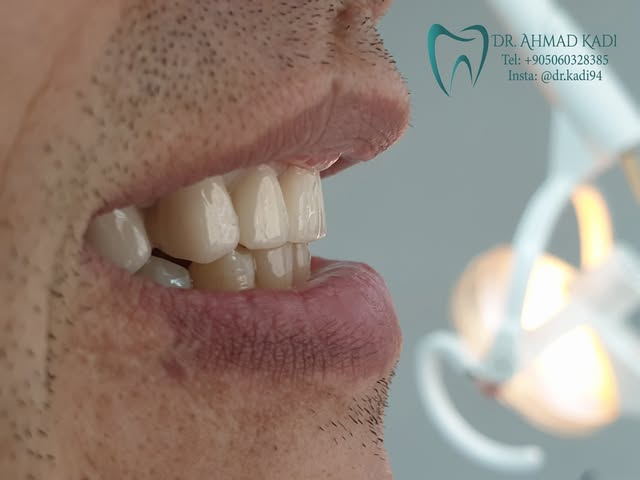
Who are zirconia crowns suitable for?
- Teeth with large fillings or fractures
- Teeth that need strengthening after root canal treatment
- Noticeably discoloured teeth
- Replacing old metal-based crowns
- Bridges or crowns on implants for missing teeth
Zirconia, E-max and veneers compared
| Feature | Zirconia | E-max | Veneer |
|---|---|---|---|
| What it covers | The whole tooth | The whole tooth | Usually the front surface only |
| Key strength | High durability | Natural translucency | Limited tooth preparation |
| Common use | Front and back teeth, bridges | Mainly front teeth | Front teeth |
| Tooth preparation | Moderate | Moderate | Usually minimal |
This table is general information; the right option for you is decided at the examination.
The treatment step by step
- 01
Examination and planning
Teeth, gums and bite are assessed; X-rays are taken if needed.
- 02
Preparing the teeth
The tooth is shaped under local anaesthetic so the crown can fit.
- 03
Impression and shade
An impression is taken and the shade chosen together; temporary crowns may be fitted meanwhile.
- 04
Try-in
The crowns are tried in and fit, shade and bite are checked.
- 05
Fitting and review
The crowns are permanently cemented and aftercare advice is given.
Aftercare
- Brush twice a day and clean between teeth
- Clean carefully where the crown meets the gum
- Check-up every six months
- Avoid biting hard objects; wear a night guard if you grind
With good care and regular check-ups, crowns can last many years.
Coming from abroad
Zirconia and E-max crowns involve a lab stage, so at least two appointments are needed. Share photos and any X-rays on WhatsApp before you travel and we’ll give you initial information; the exact timing and plan are confirmed after the examination.
Ask on WhatsApp