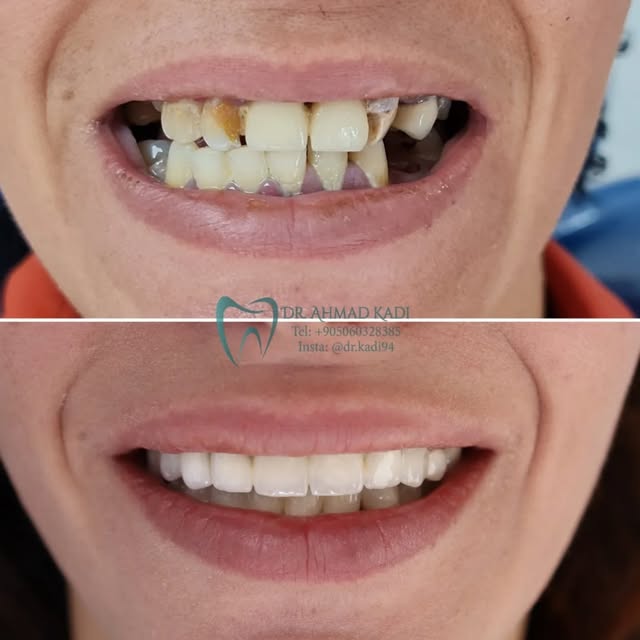
Porcelain veneers are thin ceramic shells bonded to the front surface of the teeth. They aim to improve shade, shape and size without covering the whole tooth.
Less tooth structure is usually removed than for a crown. Not every tooth is suitable, though; tooth structure, bite and grinding habits are assessed at the examination.
Front teeth with shade, shape, small chips or gaps
Advantage
Usually limited tooth preparation
Material
Porcelain / glass ceramic (e.g. E-max)
When are veneers a good option?
Discolouration that whitening cannot lift
Small chips or wear
Small gaps between teeth
Uneven length or shape
Mild irregularities in alignment (in suitable cases)
When might veneers not be suitable?
For teeth with large decay or fillings, heavy grinding or insufficient enamel, zirconia or E-max crowns may be more suitable. Gum disease should be treated first.
The treatment step by step
01
Examination and smile analysis
We assess whether your teeth are suitable for veneers.
02
Preview
Where suitable, a temporary mock-up shows the result in advance.
03
Limited preparation
The front surface of the tooth is prepared only as much as needed.
04
Impression and shade
An impression is taken and the shade chosen; temporaries may be placed.
05
Bonding
The veneers are bonded with special adhesives and the bite is checked.
Aftercare
Brush regularly and clean between teeth
Avoid habits like nail biting or chewing pens
Wear a night guard if you grind your teeth
Check-up every six months
Coming from abroad
Veneers need more than one appointment because of the impression and lab stage. Share your photos on WhatsApp before you travel and we’ll give an initial assessment and plan the timing with you.
What is the difference between veneers and zirconia crowns?
A veneer is usually a thin shell covering only the front of the tooth; a zirconia crown covers the whole tooth. Crowns suit teeth with more structural loss, veneers suit mainly cosmetic corrections.
Are teeth filed down for veneers?
In most cases a small amount is removed from the front surface. In some suitable cases preparation can be very limited; this is decided at the examination.
How long do veneers last?
It depends on care, habits and your bite. With good oral hygiene and regular check-ups, veneers can last many years.
Will my teeth be sensitive after veneers?
Some short-term sensitivity is possible and usually eases within a few days.
This page is for general information and is not medical advice. Diagnosis and the treatment plan are decided after a dental examination; timing and results vary from person to person.